
I still remember the first time I plated this pesto pasta and grilled shrimp stack — it looked restaurant-fancy but came together in less than 30 minutes. Bright basil pesto, lemon-bright shrimp and glossy, saucy pasta layered into a neat tower make it a perfect weeknight showstopper or a simple centerpiece for guests. If you want a hearty, creamier pasta to serve another night, try creamy beef pasta for a different vibe.
Why you’ll love this dish
This stack balances easy prep with high-impact presentation. The pesto keeps things herb-forward and fresh; grilled shrimp add smoky texture and lean protein; and using a ring mold turns a humble bowl of pasta into something special without extra fuss. It’s quick enough for a weeknight but pretty enough for company.
“The pesto was bright and balanced; the shrimp had great char. We felt like we were dining out at home.” — home cook review
Reasons to reach for this recipe:
- Fast: active time is short — pesto can be made while water boils.
- Flexible: use linguine, fettuccine, or spaghetti and swap nuts if needed.
- Crowd-pleasing: adults love the flavor; kids usually like the pasta and mild shrimp.
- Make-ahead friendly: pesto can be made a day ahead.
The cooking process explained
Step-by-step overview:
- Blitz fresh basil, nuts, cheese, garlic and lemon into a bright pesto.
- Cook pasta al dente, save some starchy water, and coat noodles with most of the pesto.
- Marinate shrimp briefly with zest and garlic.
- Grill or char the shrimp quickly until opaque.
- Stack pasta and shrimp in layers for an impressive presentation.
This gives you a roadmap before you touch a pot — nothing here is complicated, but timing matters so the shrimp stay juicy and the pasta stays glossy.
What you’ll need
- 16–20 medium shrimp, peeled and deveined (about ¾–1 lb)
- 8 oz linguine, fettuccine, or spaghetti
- 2 packed cups fresh basil leaves (no stems)
- ¼ cup pine nuts (toast them lightly for more flavor)
- ½ cup grated Parmesan cheese (or Pecorino Romano)
- 1–2 garlic cloves (adjust to taste)
- ½ cup olive oil total (for pesto + a little to coat shrimp)
- Juice and zest of ½ lemon
- Salt and freshly ground black pepper
- Optional: red pepper flakes for heat; fresh herbs (parsley or extra basil) for garnish
Ingredient notes and substitutions:
- Pine nuts can be swapped for toasted walnuts or almonds to save cost.
- Use store-bought pesto in a pinch; stir in extra lemon and a spoon of olive oil to freshen it.
- For dairy-free, omit Parmesan and add a tablespoon of nutritional yeast and extra nuts for texture.
Directions to follow
- Make the pesto. In a food processor combine basil, pine nuts, Parmesan, garlic, lemon juice and a pinch of salt. Pulse to break down solids. With the motor running, stream in olive oil until the mixture is smooth but still slightly textured. Taste and adjust salt, lemon, or garlic. Don’t over-process; you want bright green flecks of basil.
- Cook the pasta. Bring a large pot of well-salted water to a boil. Add pasta and cook until al dente (one minute less than the package if you like a little bite). Reserve ½–1 cup of pasta cooking water, then drain. Return pasta to the pot off heat and toss with about ¾ of the pesto. Add reserved cooking water a tablespoon at a time until the sauce clings and the pasta looks glossy.
- Marinate the shrimp. Toss shrimp with a drizzle of olive oil, lemon zest, a pinch of minced garlic, salt and pepper. Let sit 5–10 minutes — just long enough to pick up flavor.
- Grill the shrimp. Preheat a grill or grill pan to medium-high. Oil the grates lightly. Grill shrimp 2–3 minutes per side, until they turn opaque and get a few charred spots. They cook very fast; avoid overcooking. (Internal temperature: 145°F if you use a thermometer.)
- Assemble the stack. If you have a ring mold, place it on the plate. Spoon a nest of pesto-coated pasta into the ring and press gently. Add a layer of 3–4 grilled shrimp. Repeat with another thin pasta layer and top with shrimp. Remove the ring carefully. If you don’t have a mold, twirl pasta with tongs into a compact mound and top with shrimp.
- Finish and serve. Drizzle extra pesto, scatter toasted pine nuts and extra grated Parmesan. Add a sprinkle of red pepper flakes or chopped parsley for color. Serve immediately.
How to plate and pair
This dish looks best when plated with contrast: bright green pesto, pink shrimp, and a sprinkle of white cheese. Use a ring mold for tidy towers, or pile pasta into small nests and arrange shrimp around the edge for a family-style look.
Pairing suggestions:
- Light salad: arugula with lemon vinaigrette or a crisp fennel and orange salad.
- Vegetables: grilled asparagus, blistered cherry tomatoes, or sautéed green beans.
- Drinks: a citrusy Sauvignon Blanc or an Italian Pinot Grigio complements the basil and lemon.
For a casual buffet or backyard party, serve this alongside crockpot French dip sandwiches so guests pick their favorite plate.
Storage and reheating tips
- Refrigerator: Store leftover shrimp and pesto-coated pasta separately in airtight containers for up to 2 days. Shrimp is best eaten the same day; stored shrimp will lose a bit of texture.
- Freezing: Pesto freezes well in ice cube trays for up to 3 months; transfer cubes to a zip-top bag. Cooked shrimp and pasta do not freeze well together — textures degrade.
- Reheating: Reheat pasta gently in a skillet over low heat with a splash of water or reserved pesto to loosen. Heat shrimp briefly (just to warm) — high heat quickly overcooks them. If reheating in the microwave, use short bursts and check often.
- Food safety: Refrigerate within 2 hours of cooking. Consume refrigerated leftovers within 48 hours.
Pro chef tips
- Toast the pine nuts: a quick 3–4 minute toast in a dry skillet adds deep, nutty flavor. Watch closely; they burn fast.
- Keep pesto bright: add a tiny splash of ice water while processing if the motor warms the paste — this helps preserve color.
- Reserve pasta water: the starchy water emulsifies oil and cheese, turning pesto into a silky sauce that clings to noodles.
- Don’t over-marinate shrimp: acid (lemon) can start to “cook” shrimp if left too long. Five to ten minutes is enough.
- Grill technique: press shrimp down briefly for good grill contact, and use a hot surface to get quick sear without drying.
Creative twists
- Protein swaps: use scallops, sliced chicken breast, or grilled salmon instead of shrimp.
- Nut-free pesto: swap pine nuts for sunflower seeds or omit nuts and add extra Parmesan and lemon.
- Vegan version: skip Parmesan and use a vegan cheese or nutritional yeast. Use olive oil and lemon to finish pasta.
- Spicy pesto: blend in a fresh jalapeño or finish with red pepper flakes for heat.
- Citrus-herb pesto: add a tablespoon of orange or lime zest to the pesto for a fruitier brightness.
FAQ – Your questions answered
Q: Can I use frozen shrimp?
A: Yes — thaw completely in the refrigerator overnight or under cold running water, then pat dry before marinating. Dry shrimp sear better and get more char.
Q: How long does homemade pesto keep?
A: Refrigerated in an airtight container, pesto keeps 3–4 days. Pour a thin film of olive oil over the surface to slow browning. For longer storage, freeze in small portions up to 3 months.
Q: Can I make this entirely ahead of time?
A: Make the pesto up to 24 hours ahead and keep chilled. Cook pasta and toss with pesto just before serving. Shrimp are best grilled right before plating, but you can grill them up to a day ahead and rewarm gently.
Q: What if I don’t have a grill?
A: Use a hot cast-iron skillet or grill pan. You can finish shrimp under a hot broiler for 1–2 minutes per side as well.
Q: How do I prevent pesto from turning dark?
A: Minimizing air exposure helps. Use the freshest basil, chill ingredients, and cover the pesto with a thin layer of olive oil before refrigerating. Freezing is the best long-term option to preserve color.
Q: Is this dish safe for kids and pregnant people?
A: Make sure shrimp are fully cooked (opaque and 145°F internal temp). Pregnant people should avoid unpasteurized cheeses; use pasteurized Parmesan. Adjust garlic and spices for younger palates.
Final thoughts
This pesto pasta and grilled shrimp stack is one of those recipes that looks elevated but is genuinely easy to pull off. Make the pesto your day-before shortcut, grill the shrimp last, and enjoy a meal that’s fast, fresh, and crowd-ready — then come back and tell me how your stack turned out.
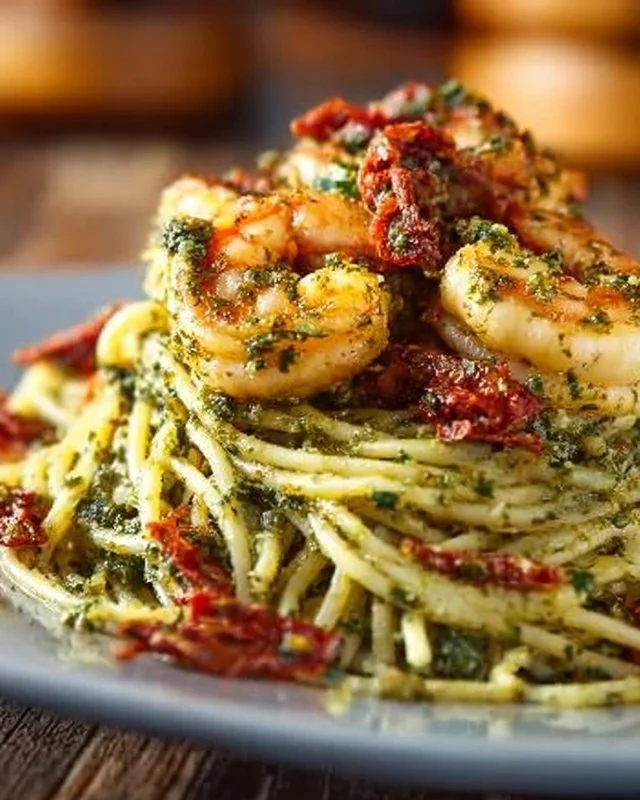
Pesto Pasta and Grilled Shrimp Stack
Ingredients
Method
- In a food processor combine basil, pine nuts, Parmesan, garlic, lemon juice and a pinch of salt. Pulse to break down solids.
- With the motor running, stream in olive oil until the mixture is smooth but still slightly textured. Taste and adjust salt, lemon, or garlic.
- Bring a large pot of well-salted water to a boil. Add pasta and cook until al dente (one minute less than the package directions).
- Reserve ½–1 cup of pasta cooking water, then drain. Return pasta to the pot off heat and toss with about ¾ of the pesto.
- Add reserved cooking water a tablespoon at a time until the sauce clings and the pasta looks glossy.
- Toss shrimp with a drizzle of olive oil, lemon zest, a pinch of minced garlic, salt and pepper. Let sit for 5–10 minutes.
- Preheat a grill or grill pan to medium-high. Grill shrimp 2–3 minutes per side, until they turn opaque and get a few charred spots.
- Place a ring mold on the plate, spoon a nest of pesto-coated pasta into the ring and press gently.
- Add a layer of 3–4 grilled shrimp. Repeat with another thin pasta layer and top with shrimp. Remove the ring carefully.
- If you don’t have a mold, twirl pasta with tongs into a compact mound and top with shrimp.
- Drizzle extra pesto, scatter toasted pine nuts and extra grated Parmesan on top. Add a sprinkle of red pepper flakes or chopped parsley for color.
- Serve immediately.