
Kimbap, a beloved staple in Korean cuisine, has a way of capturing hearts and taste buds alike. I remember the first time I tried this colorful dish at a local Korean festival—it was love at first bite! Kimbap is not just a dish; it’s an experience, perfect for picnics, lunchboxes, or a cozy family dinner. With its vibrant ingredients wrapped in seaweed and rice, it combines convenience and delightful flavors, making it a go-to for busy weeknights or leisurely weekend brunches.
Why make this recipe
Reasons to try it
This recipe is a must-try for so many reasons! First off, it’s incredibly quick and budget-friendly, perfect for those looking to whip up something delicious without breaking the bank. Plus, Kimbap is versatile; you can customize it with your favorite ingredients, ensuring everyone in the family can enjoy it. Whether you’re hosting a gathering or packing a lunch, Kimbap fits the bill beautifully.
"I made Kimbap for my family last Sunday, and it was a hit! The kids loved rolling their own versions, and I appreciated how easy and fun it was. Definitely a keeper!"
The cooking process explained
Get ready for a culinary adventure! This Kimbap recipe comes together in a series of simple steps. You’ll start by preparing the filling ingredients and cooking the rice. Then, roll it all up in seaweed for a delightful finish. It’s a straightforward process that’s achievable for both novice cooks and seasoned chefs alike!
Ingredients
What you’ll need
To create this delicious Kimbap, gather the following ingredients:
- 3 eggs
- 1 cucumber
- 3 carrots
- 1 pickled yellow radish (danmuji/takuan)
- 1 can of Spam (lunch meat)
- 2 cups of short-grain white rice, cooked
- 4 sheets of seaweed (gim/nori)
- Optional: sesame oil and sesame seeds
If you’re looking for substitutions, feel free to use tofu or another protein in place of Spam for a vegetarian twist. You can also experiment with different pickled vegetables if danmuji isn’t available.
Directions
Step-by-step instructions
-
Cooking the Eggs: Beat the eggs in a bowl. Pour into a lightly greased pan over medium heat. Cook until set, then slice them into thin strips.
-
Preparing the Vegetables: Cut the cucumber, carrots, pickled radish, and Spam into thin strips. You might want to remove the cucumber seeds for a less watery filling.
-
Sautéing the Carrots: Toss the carrot strips with 1 tablespoon of salt, letting them sit for 15 minutes. Afterward, squeeze out the excess liquid and sauté in a pan for about 4 minutes. Remove the carrots.
-
Frying the Spam: In the same pan, add vegetable oil and fry the Spam strips for about a minute on each side until golden brown.
-
Assembling the Kimbap: Place a sheet of seaweed on your bamboo mat. With wet fingers, spread a thin layer of rice on the seaweed, leaving about 1 inch at the top empty.
-
Adding the Fillings: Line up your cooked ingredients in the center of the rice.
-
Rolling It Up: Lift the bamboo mat and carefully fold the rice over the fillings, pressing down as you roll forward to seal. If needed, use grains of rice like glue to keep everything together.
-
Finishing Touches: Optionally, brush the roll with sesame oil and sprinkle sesame seeds on top.
How to serve Kimbap (Korean Seaweed Rice Rolls)
Best ways to enjoy it
Kimbap is stunning on its own but consider pairing it with a light soy sauce or a spicy mayo for dipping. Serve alongside some fresh kimchi for a traditional touch, or arrange it on a platter with colorful garnishes to impress your guests at a gathering!
How to store
Keeping leftovers fresh
To store Kimbap, wrap it tightly in plastic wrap and keep it in the refrigerator for up to 2 days. If you want to prepare it in advance, it’s best to store the rolled Kimbap uncut to maintain freshness. For frozen Kimbap, wrap it well and use it within a month. Just be sure to thaw it overnight in the fridge before enjoying!
Tips to make
Helpful cooking tips
Here’s a pro tip: wet your fingers before handling the rice to prevent sticking. Also, ensure your rice is slightly sticky for easy rolling; short-grain rice is ideal for this recipe. If you’re short on time, consider using pre-cooked rice that you can find in many grocery stores!
Variations
Creative twists
Feel free to get creative! Substitute the Spam with grilled chicken, tofu, or even avocado for a vegetarian version. You can also swap out the vegetables for whatever you have on hand—zucchini, bell peppers, or even cooked shiitake mushrooms work well. If you prefer a spicy kick, add some gochujang to the rice for extra flavor!
FAQs
Common questions
-
Can I use regular rice instead of short-grain?
- While you can, short-grain rice tends to be stickier, which is ideal for rolling.
-
How long will Kimbap last in the fridge?
- It’s best enjoyed fresh, but you can store it for up to 2 days in the fridge.
-
Can I make Kimbap vegetarian?
- Absolutely! Just replace the Spam with your choice of protein or extra vegetables.
-
Do I need a bamboo mat to roll Kimbap?
- While a bamboo mat makes it easier, you can use parchment paper or even your hands if need be—just be prepared for a little mess!
-
What’s the best way to cut Kimbap?
- Use a sharp, wet knife to slice through the rolls for clean cuts without squishing the ingredients.
Final thoughts
Ready to impress your family and friends with homemade Kimbap? With its colorful ingredients and delightful flavors, this dish is sure to bring joy to any table. Don’t forget to share your creations or any questions in the comments below! Happy cooking!
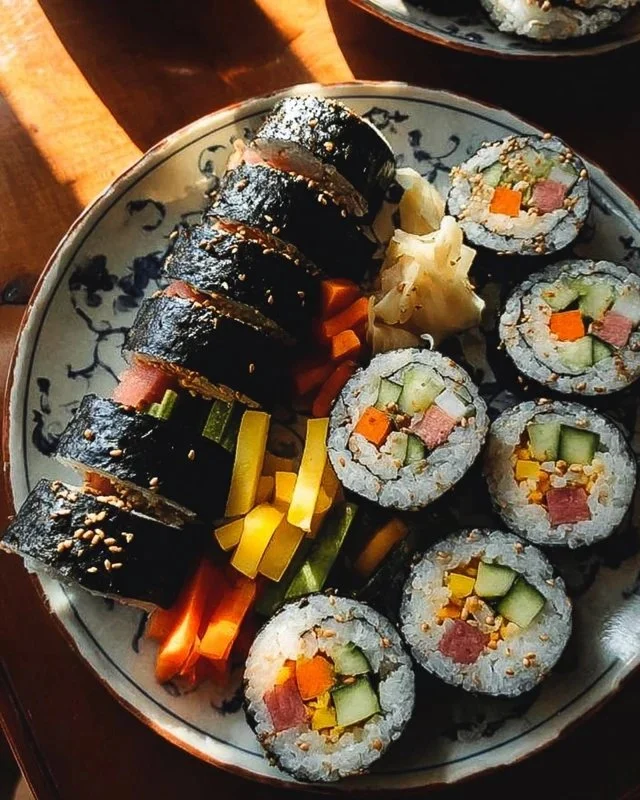
Kimbap
Ingredients
Method
- Beat the eggs in a bowl. Pour into a lightly greased pan over medium heat. Cook until set, then slice them into thin strips.
- Cut the cucumber, carrots, pickled radish, and Spam into thin strips. You might want to remove the cucumber seeds for a less watery filling.
- Toss the carrot strips with 1 tablespoon of salt, letting them sit for 15 minutes. Afterward, squeeze out the excess liquid and sauté in a pan for about 4 minutes. Remove the carrots.
- In the same pan, add vegetable oil and fry the Spam strips for about a minute on each side until golden brown.
- Place a sheet of seaweed on your bamboo mat. With wet fingers, spread a thin layer of rice on the seaweed, leaving about 1 inch at the top empty.
- Line up your cooked ingredients in the center of the rice.
- Lift the bamboo mat and carefully fold the rice over the fillings, pressing down as you roll forward to seal. If needed, use grains of rice like glue to keep everything together.
- Optionally, brush the roll with sesame oil and sprinkle sesame seeds on top.